Emerging Tournament Frameworks Unite Live Dealer Interactions with Mobile Accumulating Rewards
Jakob Schulz · May 27, 2026

Emerging Tournament Frameworks Unite Live Dealer Interactions with Mobile Accumulating Rewards
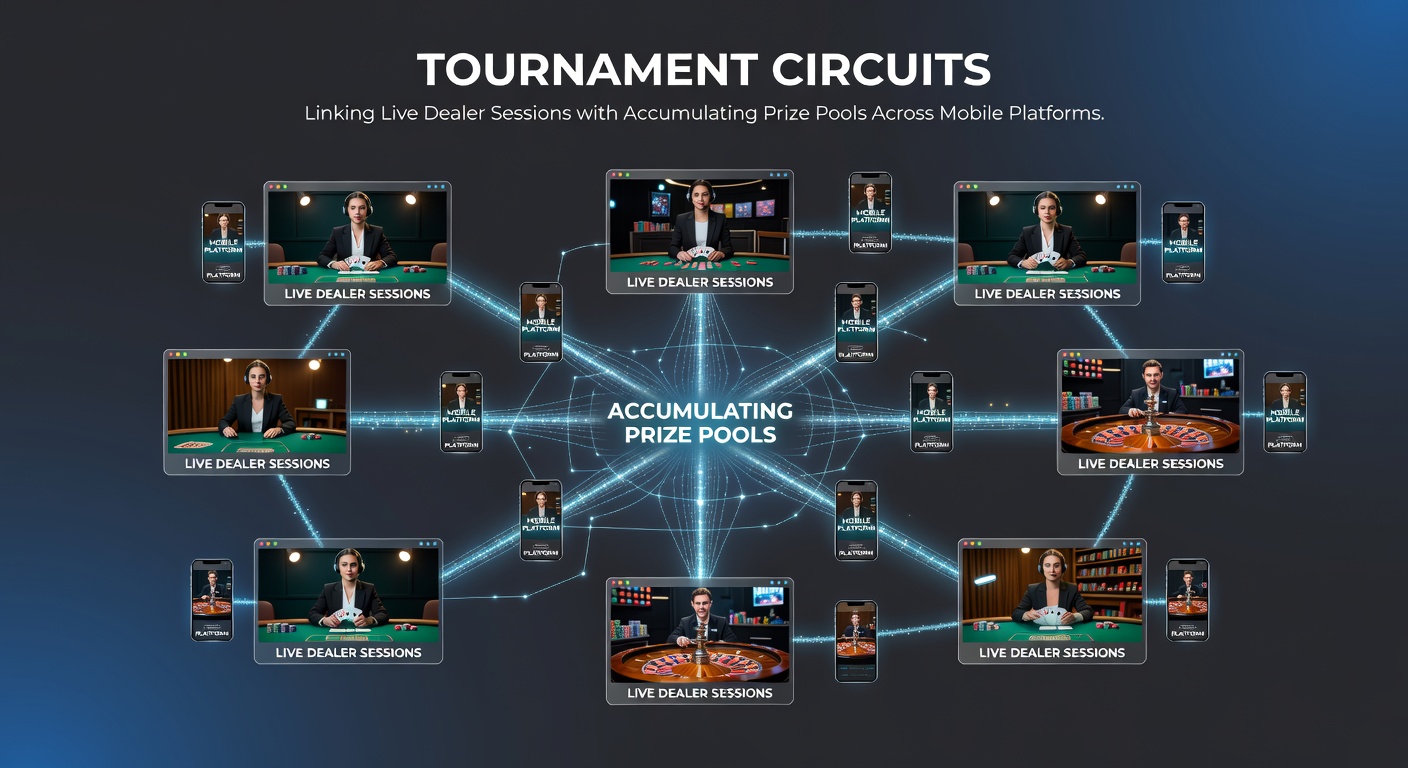
Platforms have developed tournament circuits that connect live dealer sessions directly to accumulating prize pools accessible through mobile applications, creating unified competition environments where participation spans multiple device types. These systems operate by synchronizing real-time interactions from live tables with digital tracking mechanisms that build prize values based on collective player entries across networks. Data from industry reports indicates steady expansion in such integrated formats during early 2026, with particular activity noted in May as operators adjusted structures to accommodate seasonal participation patterns.
Core Mechanics of Cross-Format Tournament Integration
Operators link live dealer environments to mobile interfaces through shared tournament engines that register actions from both physical-streamed tables and virtual sessions into single leaderboards. Prize pools accumulate when players enter via either format, with contributions from entry fees and additional triggers like volume-based multipliers feeding into central funds that grow until distribution at circuit endpoints. Researchers at gaming technology conferences have documented how these circuits maintain consistency by using timestamped event logs that prevent discrepancies between live and mobile contributions.
Systems often employ API connections to stream dealer outcomes instantly to mobile participants, allowing simultaneous competition without requiring physical presence at casino floors. According to figures from the European Gaming and Betting Association, mobile entries now account for over 60 percent of total tournament volume in connected circuits during peak months. This integration supports progressive accumulation models where pools carry over between events if not fully claimed, encouraging sustained engagement across sessions.
Role of Mobile Platforms in Expanding Participation
Mobile applications serve as primary access points for accumulating rewards because they enable continuous monitoring and entry into live-linked events from any location. Users receive notifications when live dealer tables open new tournament rounds, and contributions from these entries feed directly into shared pools visible on device screens. Observers note that this setup reduces barriers for players who prefer remote access while still tying outcomes to the authenticity of live dealer interactions.
Technical implementations include secure synchronization protocols that align mobile progress with live session data in real time, preventing delays that could affect prize calculations. Studies from academic research groups in Australia have highlighted efficiency gains in these networks, showing reduced processing times for pool updates compared to earlier segregated systems. In May 2026, several operators introduced enhanced mobile features that allow instant qualification checks against live table availability, further streamlining the circuit flow.
Data Trends and Participation Patterns
Analytics from multiple jurisdictions reveal increasing crossover between live dealer attendance and mobile tournament involvement, with combined circuits reporting higher average pool sizes than standalone formats. Government statistics from Canadian provincial regulators show a 25 percent rise in cross-platform entries for integrated events through the first quarter of 2026. These patterns emerge because players can switch between live observation and mobile play without losing accumulated standings.
What's interesting is how operators track geographic distribution of contributions, using aggregated data to adjust starting pool values and maintain balance across regions. Industry organizations such as the American Gaming Association have published summaries indicating that mobile-linked live tournaments attract broader demographics, including participants who engage primarily through handheld devices during commuting hours or evening slots.
Technical and Regulatory Considerations
Developers implement encryption standards and audit trails to ensure prize pool integrity across live and mobile segments, addressing concerns about synchronization accuracy. Regulatory frameworks in various markets require transparent reporting of accumulation formulas, which operators fulfill through public dashboards that update pool totals based on verified entries. This approach supports compliance while allowing circuits to scale with growing mobile adoption rates.
One case documented by independent analysts involved a multi-operator circuit where live dealer sessions in European venues contributed to mobile-accessible pools, resulting in distributed rewards exceeding baseline expectations for isolated events. Such examples demonstrate practical application of the linking mechanisms without reliance on single-platform limitations.
Conclusion
Tournament circuits that merge live dealer sessions with accumulating prize pools on mobile platforms represent a structural evolution in gaming formats, supported by synchronization technologies and participation data. Continued development in this area depends on advancements in connectivity and regulatory alignment across regions, with activity levels observed through mid-2026 providing indicators for future scaling. Operators and technology providers continue to refine these connections to sustain unified competition environments.